- Open today 11–17
26 November 2026– 2 May 2027
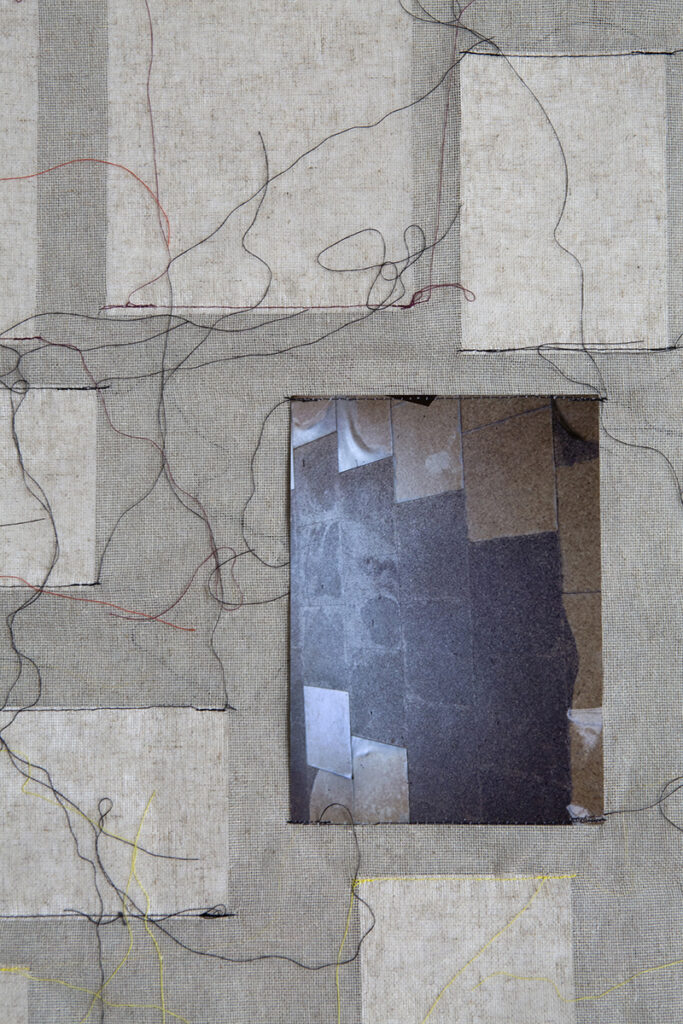
In the exhibition Wipe All Traces – An Archive of Re-membering, artists Tina Enghoff and Kent Klich explore how experiences of migration and displacement can be documented, shared and preserved through artistic processes. The exhibition is conceived as a living archive comprising oral histories, photographs, photogrammetry, video works, sculptures and site-specific installations. Together, the works form a tapestry of memories and experiences that connect past and present. The archive continues to evolve through collaborations with people who have lived experience of forced migration, investigating how artistic methods can create new ways of understanding, communicating and sharing complex experiences.
The exhibition is a further development of the art and research project In the Past We Made History, which was inspired by the reception of refugees in Denmark in 2015, when more than one million people sought asylum in Europe. The project drew on stories, experiences and testimonies that are largely absent from collective memory and official historical accounts.
For the exhibition at Skissernas Museum, several new site-specific works have been created. One of the exhibition’s central works is The Sixteen Seeds Library, an inclusive and collaborative artwork consisting of 250 blue books produced through individual and collective workshops with people who have experienced forced displacement. Suspended from the ceiling of the museum’s largest gallery, the books form a library of stories, memories and experiences. Through digital presentations and video works, visitors can explore the content of the books and the stories they contain in greater depth. The work also includes a large-scale video projection of a waterfall in the Pite River in Sápmi. Long embedded in Sámi history and storytelling, the waterfall here also becomes part of the narratives created by people who arrived in the region during the refugee reception of 2015.
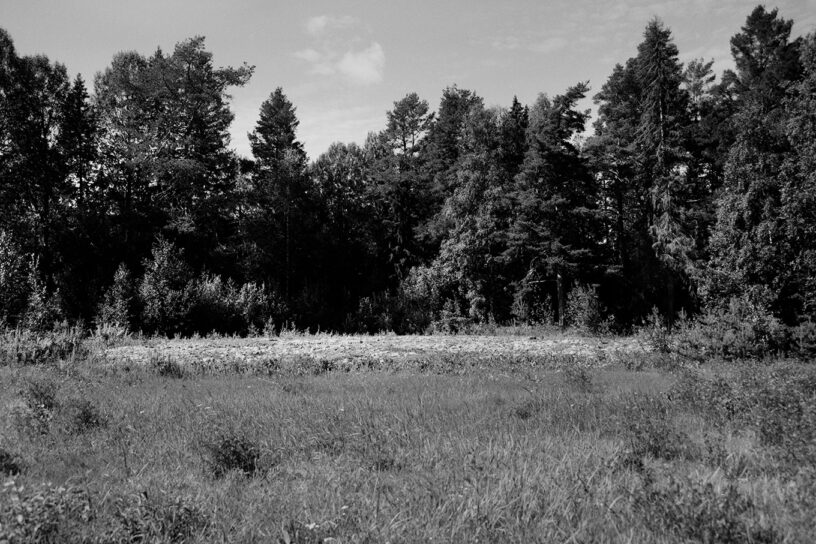
Another new work created for the exhibition is Geography of Violence, based on the artists’ documentation of around forty sites across Sweden where attacks or arson targeting asylum accommodation took place in 2015 and 2016. From each site, a small concrete cast has been made and incorporated into a sculptural installation. Together, these casts serve as testimonies and material traces of events that risk being forgotten. The installation also includes a series of photographs from each location.
The exhibition forms part of a research collaboration with Erika Larsson, researcher at Skissernas Museum and the Department of Arts and Cultural Sciences at Lund University. The project explores the potential of artistic processes to contribute to healing, participation and social change. Here, healing is understood not in a clinical sense, but as the possibility of creating space through artistic collaboration for new perspectives, shared storytelling and the making of meaning.
On 22–23 April 2027, the conference What Does Art Do to Us – Together? Collective Artistic Processes and Health will be held at Skissernas Museum. Enghoff and Klich will participate in the conference, and a publication on the exhibition will be released in conjunction with the event.
Tina Enghoff (DK) is a visual artist with a background in photography and film. Her work revolves around storytelling, civic engagement, collaboration and site-specific art projects. From a Nordic perspective, she explores questions of colonialism, welfare-state institutions and the power of archives to shape our understanding of history. Her practice is characterised by multiple points of entry and a resistance to fixed modes of representing people and experiences. Enghoff has exhibited extensively at art centres and museums nationally and internationally and has received numerous grants and awards.
Kent Klich (SE) is a visual artist whose practice encompasses photography, film, slow journalism and various forms of collaboration. He is interested in the ways images interact with language, sound, objects and documents. Through his projects, he investigates social and political issues, bringing complex realities into view from multiple perspectives. His work raises questions rather than offering simple answers, creating space for reflection as well as engagement. Klich has exhibited nationally and internationally at art centres and museums and has received several grants and distinctions. He has been based in Denmark since 2003.
Image above: Tina Enghoff and Kent Klich, Geography of Violence (detail), 2026, photograph.